
Table of Contents
- Why Seasonal Plumbing Maintenance Matters in West Palm Beach
- Spring Plumbing Inspection and Preparation Tasks
- Summer Cooling System and Water Pressure Considerations
- Fall Drain Cleaning and Clogging Prevention
- Winter Water Line Protection in South Florida
- How We Help You Stay Ahead of Seasonal Issues
- Common Seasonal Plumbing Problems We Solve
- Creating Your Annual Maintenance Schedule
- When to Call Our 24/7 Emergency Services
- Protecting Your Investment with Professional Inspections
- Frequently Asked Questions (FAQ)
Why Seasonal Plumbing Maintenance Matters in West Palm Beach
West Palm Beach’s subtropical climate creates unique plumbing challenges that shift throughout the year. The combination of intense summer heat, seasonal rainfall, and occasional cold snaps means your plumbing system works differently each season. What protects your pipes in summer may leave them vulnerable in winter, and vice versa.
Seasonal maintenance isn’t just about fixing problems after they occur. We’ve found that homeowners who address plumbing needs proactively save thousands in emergency repairs and water damage claims. Your water heater, outdoor lines, drain systems, and fixtures all experience different stressors depending on the time of year. By staying ahead of these changes, you protect your home’s infrastructure and maintain consistent water pressure and temperature year-round.
The reality is simple: neglecting seasonal checks leads to surprise failures at the worst possible times. A water line that freezes in February or a clogged drain that backs up during heavy rain season can disrupt your household and create costly damage. Our goal is to help you avoid those emergencies through straightforward, timely maintenance.
Spring Plumbing Inspection and Preparation Tasks
Spring is your chance to reset your plumbing system after winter stress. As temperatures warm and water usage increases, now’s the time to identify any damage from cold weather or seasonal shifts.
Start with your outdoor hose bibs and irrigation lines. Check for leaks, cracks, or debris that accumulated over winter. Open each bib slowly to ensure water flows freely and there are no ice-related blockages. If you have an irrigation system, flush it thoroughly before the dry season intensifies demand.
Inside your home, inspect visible pipes under sinks and in the basement for corrosion, mineral buildup, or slow leaks. Look at your water heater’s temperature and pressure relief valve. Test it by lifting the lever slightly to confirm water drains properly. We recommend flushing your water heater to remove sediment buildup, which improves efficiency and extends its lifespan.
Check all drain lines for slow drainage or gurgling sounds. Spring rain can push debris into gutters and downspouts, which sometimes redirects water toward foundation drains and outdoor plumbing connections. Clear gutters and ensure downspouts drain at least 4-6 feet away from your home’s foundation.
Run water through infrequently used drains (like the guest bathroom or basement sink) to refill P-traps and prevent sewer gas from entering your home. This small step prevents unpleasant odors and keeps your drainage system functioning properly.
Summer Cooling System and Water Pressure Considerations
Summer brings peak water usage and puts your plumbing system under maximum strain. Higher temperatures increase water pressure throughout your home, which stresses pipes, fixtures, and appliances if not properly regulated.
Check your water pressure regulator (usually located where the main line enters your home). Excessive pressure accelerates wear on fixtures and increases water waste. Healthy household water pressure sits between 40-60 PSI. If your pressure regularly exceeds this range, your regulator needs adjustment or replacement. We can test your system and make corrections to protect your pipes from premature failure.
Air conditioning units and pool equipment also create plumbing demands during summer. If you have a pool, inspect pump connections and drain lines for leaks. AC condensation lines need to drain freely; if blocked, they create moisture problems and ice formation in the compressor unit.

Outdoor spigots and soaker hoses work overtime during summer. Look for weeping connections where hoses attach and ensure no water pools around outdoor fixtures. Even small leaks multiply into significant water waste during a three-month period. We recommend installing water-efficient fixtures and inspecting all outdoor connections monthly during the warmest months.
Monitor your water bill for unexpected increases, which often signal a hidden leak. Summer consumption naturally rises, but a spike beyond normal usage suggests a problem worth investigating. Our advanced leak detection technology pinpoints leaks that aren’t visible, saving you from excessive water loss and future damage.
Fall Drain Cleaning and Clogging Prevention
Fall brings another seasonal shift: trees shed leaves, gutters collect debris, and outdoor drainage systems become vulnerable to blockages. This is the perfect time to professionally clean your drains before winter.
Leaves and yard debris inevitably work their way into gutters, downspouts, and storm drains. This material filters down to your home’s main drain line and creates clogs that worsen during heavy rain. We recommend professional drain cleaning in early fall to clear accumulated debris before the rainy season peaks.
Inside your home, fall is when bathroom and kitchen drains often slow down due to increased debris and mineral deposits. Hair, soap buildup, and food particles accumulate more noticeably as cooler temperatures slightly affect water flow. Professional drain cleaning removes these obstructions and prevents backups during fall and winter.
Inspect your sump pump if you have one. Fall and winter bring increased groundwater, and your sump pump needs to work reliably. Test it by pouring water into the pit to confirm the pump activates and discharges properly. Check the discharge line to ensure it drains away from your foundation.
Clean or replace your water filter. Fall dust and pollen can clog outdoor filters, reducing water quality and pressure. If you have a whole-home filter system, check its status and replace cartridges as recommended by the manufacturer.
Winter Water Line Protection in South Florida
Although West Palm Beach winters rarely see temperatures below freezing for extended periods, occasional cold snaps can damage exposed water lines. Even a single night of freezing temperatures can crack pipes if they’re uninsulated or poorly positioned.
Insulate exposed pipes in unheated areas like garages, crawl spaces, and outdoor walls. Pipe insulation foam is inexpensive and easy to install. Focus on pipes closest to exterior walls and those without protection from the home’s interior warmth.
If you live in a flood-prone area, ensure your main water shut-off valve is accessible and functional. Know its location and practice turning it off. During heavy rain events or hurricane season, water from flooding can contaminate your plumbing system if backflow prevention isn’t in place. We install backflow preventers to protect your home’s water supply from contamination during weather emergencies.
Drain and shut off exterior faucets and irrigation systems. Leave the outdoor spigots open slightly so any residual water can expand safely if temperatures drop. Frozen water inside a closed spigot creates dangerous pressure that cracks the faucet body or underground lines.
Check weatherstripping around doors and windows near plumbing access points. Drafts can accelerate cooling in areas where pipes run, increasing freezing risk. Simple weatherstripping improvements provide insulation without major renovation.
How We Help You Stay Ahead of Seasonal Issues
Our team specializes in helping West Palm Beach homeowners and businesses avoid costly plumbing emergencies through strategic, seasonal maintenance. We understand the local climate and know exactly which problems emerge each season, so we tailor our inspections and recommendations to your specific timeframe.
We offer comprehensive seasonal inspection packages that address the unique needs of your home during each quarter of the year. Our licensed technicians check water pressure, inspect visible pipes, test drainage, assess outdoor connections, and verify that your water heater and fixtures are operating efficiently. Each inspection results in a clear report detailing any issues and our recommendations for addressing them.
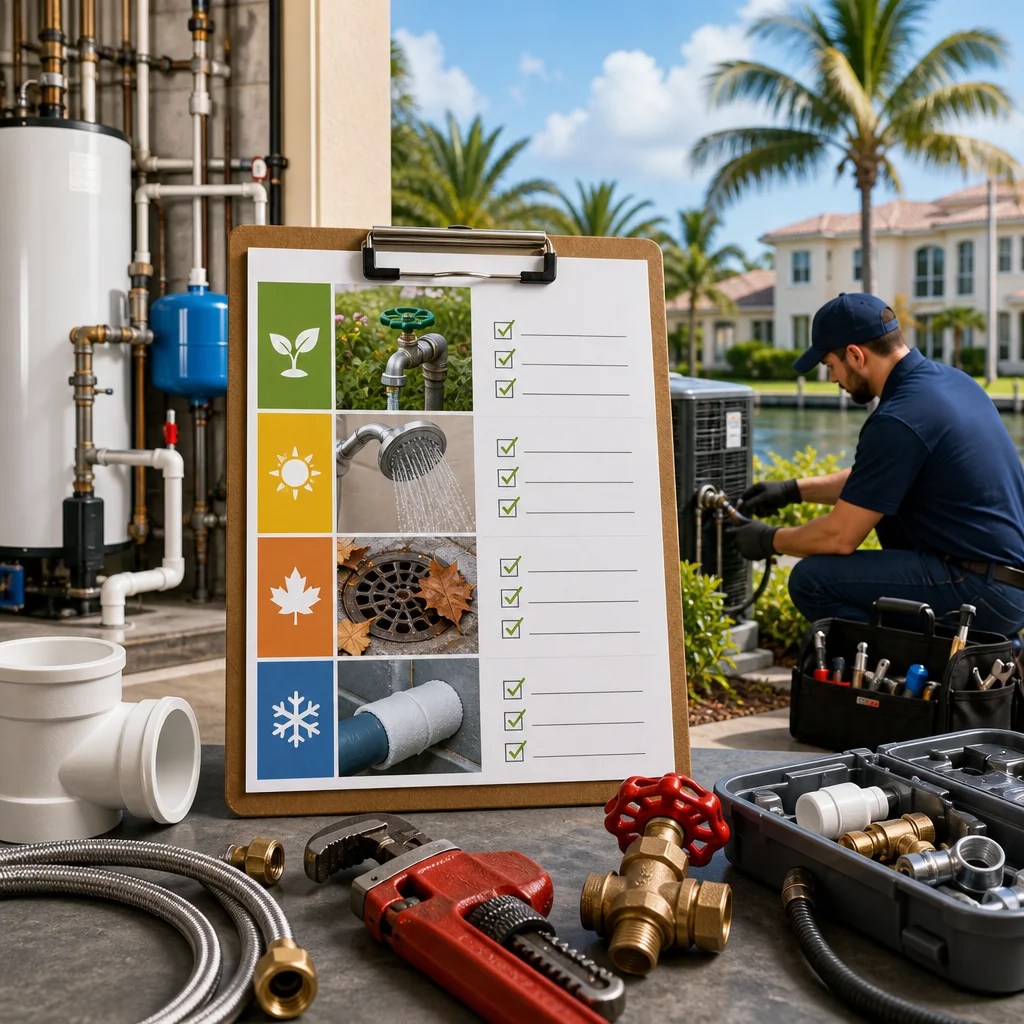
Our plumbing services include professional drain cleaning, leak detection using advanced technology, water heater maintenance and repair, and fixture installation. Rather than waiting for problems to develop, we help you schedule maintenance during the ideal seasonal window, which costs less than emergency repairs and prevents water damage.
We’re available 24/7 for emergencies, but our goal is to reduce the frequency of those calls through proactive care. When you invest in seasonal maintenance, you’re investing in your home’s reliability and your peace of mind.
Common Seasonal Plumbing Problems We Solve
Over years of serving South Florida, we’ve identified the most common seasonal issues our customers face:
Spring: Water heater sediment buildup, outdoor line damage from winter freeze cycles, slow drains from winter debris accumulation.
Summer: High water pressure from heat expansion, AC condensation line blockages, hidden leaks signaled by unusually high water bills.
Fall: Main drain line clogs from leaves and debris, slow drainage in bathrooms and kitchens, sump pump malfunctions.
Winter: Frozen or cracked outdoor pipes, backflow contamination during heavy rain, main water shut-off valve corrosion from seasonal changes.
Each problem is preventable or manageable with proper seasonal attention. We’ve solved thousands of these issues and can quickly diagnose and fix whatever your home encounters.
Creating Your Annual Maintenance Schedule
Your best defense against seasonal plumbing problems is a structured maintenance calendar. We recommend scheduling inspections and maintenance tasks in this order:
January-February: Inspect pipes for winter freeze damage, test water heater, check main shut-off valve function, verify backflow prevention.
April-May: Inspect outdoor hose bibs and irrigation systems, flush water heater sediment, test outdoor connections.
July-August: Test water pressure regulator, inspect AC drain lines, check for hidden leaks, inspect outdoor spigots.
September-October: Professional drain cleaning, sump pump testing, inspect gutters and downspouts, check water filter status.
Block these maintenance windows on your calendar now. You might group spring and summer tasks together, or schedule fall and winter maintenance during September and January. The key is consistency. Regular maintenance every quarter costs significantly less than reactive emergency repairs.

When to Call Our 24/7 Emergency Services
Some plumbing issues can’t wait for seasonal maintenance. We’re available around the clock to handle genuine emergencies that disrupt your home or business.
Call immediately if you experience a major water leak, burst pipe, backed-up sewer line, or no hot water when you need it. If water is pooling under your home, sewage is backing up into your drains, or you smell gas near plumbing fixtures, these also demand urgent attention.
We respond quickly to emergency calls and arrive equipped to diagnose and repair most problems the same day. Our technicians are licensed and insured, so you’re protected regardless of the complexity of the issue.
The difference between a small repair and major damage often comes down to how quickly you respond to early warning signs. If you notice changes in water pressure, temperature, drainage speed, or unusual noises in pipes, don’t wait until it becomes an emergency. Contact us for a diagnosis.
Protecting Your Investment with Professional Inspections
Your home’s plumbing system is too important to rely on guesswork or delayed attention. Professional inspections give you confidence that your system is working properly and that potential problems are identified before they cause damage.
We bring advanced leak detection technology to every inspection, which identifies hidden leaks that visual checks miss. We check water pressure, water heater condition, drain flow rates, and the integrity of visible pipes. After each inspection, you receive a clear report and honest recommendations for any work your home needs.
Seasonal maintenance is one of the most cost-effective investments you can make in your home. The relatively modest expense of quarterly inspections and routine maintenance saves thousands in emergency repairs and water damage. We’ve worked with countless West Palm Beach homeowners who initially hesitated to invest in preventive care, only to face devastating pipe failures or flooding that could have been prevented.
Contact us today to schedule your seasonal plumbing inspection. We’ll develop a maintenance plan customized to your home’s unique needs and your local seasonal demands. Our team is ready to help you protect your investment and keep your plumbing system reliable year-round.
Frequently Asked Questions (FAQ)
What seasonal plumbing tasks should we prioritize in West Palm Beach?
We recommend focusing on spring inspections to catch any winter damage, summer water pressure checks before heat peaks, fall drain cleaning before leaves clog your lines, and winter preparation for our unique South Florida freeze risks. Each season brings different challenges to your plumbing system, and we’ve found that addressing them proactively prevents costly emergencies. Our maintenance checklist helps you tackle the most critical tasks when they matter most.
How often should we schedule professional plumbing inspections?
We suggest at least one comprehensive inspection annually, ideally in spring before the heavy usage months arrive. However, if you’ve experienced previous issues or own an older home, we recommend two inspections yearly to catch developing problems early. Our advanced leak detection technology lets us spot hidden issues before they become expensive repairs.
When should we call your emergency services versus scheduling routine maintenance?
We’re available 24/7 for true emergencies like burst pipes, sewage backups, or complete fixture failures that need immediate attention. For seasonal maintenance, drain cleaning, inspections, and installations, we schedule appointments at your convenience during regular hours. If you’re unsure whether your situation requires emergency service, we’re happy to discuss it with you directly and recommend the best approach.